
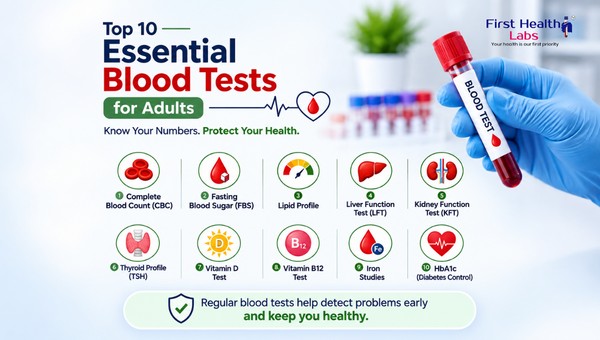




Top 10 Essential Blood Tests for Adults
Aug 29, 2026
Blood tests are an important part of many health evaluations. They can provide valuable information about blood cells, glucose levels, cholesterol, organ function, vitamins, minerals, and other health markers that may not always be noticeable through symptoms.
The Top 10 Essential Blood Tests for Adults can differ from one person to another. Age, lifestyle, family history, existing medical conditions, medications, and symptoms can all influence which tests may be appropriate. Therefore, this list should be considered a general guide rather than a standard testing requirement for every adult. Knowing about different essential blood tests for adults can help you understand what each test measures and why a healthcare professional may recommend it.
Top 10 Essential Blood Tests for Adults
Essential blood tests are laboratory investigations that help evaluate specific areas of health. Some may be used as part of preventive screening, while others are ordered when symptoms or particular health risks are present.
Depending on your individual health needs, blood testing may provide information about:
-
Blood cell levels
-
Blood glucose
-
Cholesterol
-
Liver health
-
Kidney function
-
Thyroid activity
-
Vitamin levels
-
Iron levels
The Top 10 Essential Blood Tests for Adults can therefore serve as an educational starting point when learning about common health assessments.
1. Complete Blood Count (CBC)
A Complete Blood Count, or CBC, is a commonly performed blood test that examines different components of the blood.
It provides information about:
-
Red blood cells
-
White blood cells
-
Hemoglobin
-
Hematocrit
-
Platelets
A CBC can help healthcare professionals investigate concerns such as anemia, unusual blood cell levels, or certain infections. Because it gives an overview of several blood components, it is often included among commonly considered blood tests for adults.
2. Fasting Blood Glucose Test
A fasting blood glucose test measures the amount of glucose present in the blood after fasting for a specified period. This test can be used to evaluate blood sugar levels and may help identify abnormal glucose levels associated with prediabetes or diabetes. Whether you need this test and how frequently it should be performed depends on factors such as your age, health history, symptoms, and diabetes risk.
3. HbA1c Test
The HbA1c test measures the percentage of hemoglobin that has glucose attached to it. It provides an indication of average blood glucose levels over roughly the previous two to three months.
In most cases, fasting is not necessary for an HbA1c test. Healthcare professionals may use it to assess blood sugar levels, support the evaluation of prediabetes or diabetes, or monitor people who have already been diagnosed with diabetes. For these reasons, HbA1c is an important test to consider when discussing the Top 10 Essential Blood Tests for Adults.
4. Lipid Profile
A lipid profile evaluates different types of cholesterol and fats circulating in the blood.
A typical lipid profile may measure:
-
Total cholesterol
-
LDL cholesterol
-
HDL cholesterol
-
Triglycerides
These measurements can contribute to an overall assessment of cardiovascular risk. However, cholesterol results are generally interpreted along with factors such as age, blood pressure, smoking status, family history, and other health information.
The recommended frequency of lipid testing can vary between individuals.
5. Liver Function Tests
Liver function tests, often referred to as LFTs, consist of several blood measurements that can provide information about liver health.
Depending on the panel requested, measurements may include:
-
ALT
-
AST
-
ALP
-
Bilirubin
-
Albumin
Abnormal results do not necessarily mean that a person has liver disease. Results need to be considered alongside symptoms, medications, medical history, and other relevant investigations.
6. Kidney Function Tests
Kidney function blood tests help healthcare professionals assess how well the kidneys are working.
Common measurements can include:
-
Creatinine
-
Blood urea
-
Estimated glomerular filtration rate (eGFR)
These tests may be particularly relevant for people with conditions or risk factors that can affect kidney health, including diabetes and high blood pressure. Regular monitoring may be recommended for people who already have a kidney-related condition or other relevant health risks.
7. Thyroid Function Tests
Thyroid blood tests are used to assess how the thyroid gland is functioning.
Commonly measured thyroid markers include:
-
TSH
-
Free T4
-
Other thyroid-related tests when required
A healthcare professional may recommend thyroid testing when symptoms such as unexplained tiredness, unexpected weight changes, temperature sensitivity, or changes in heart rate are present. The exact thyroid tests needed depend on the individual's symptoms, medical history, and clinical assessment.
8. Vitamin B12 Test
A vitamin B12 blood test helps determine whether the body has an adequate amount of vitamin B12.
Low vitamin B12 levels may be associated with symptoms such as:
-
Tiredness
-
Weakness
-
Tingling or numbness
-
Difficulty concentrating
-
Certain forms of anemia
People with limited dietary intake, absorption problems, or certain medical conditions may have an increased risk of vitamin B12 deficiency.
Testing may be recommended when symptoms or risk factors suggest that checking vitamin B12 levels could be useful.
9. Vitamin D Test
A vitamin D blood test can be used to evaluate vitamin D status when testing is considered appropriate. Vitamin D supports several important functions in the body, including calcium absorption, bone maintenance, and normal muscle function. People with certain medical conditions, symptoms, or risk factors may benefit from discussing vitamin D testing with a healthcare professional.A vitamin D test is not necessarily required routinely for every adult.
10. Iron Studies
Iron studies consist of blood tests that help evaluate the body's iron levels and iron stores.
Depending on the clinical situation, testing may include:
-
Serum iron
-
Ferritin
-
Total iron-binding capacity
-
Transferrin saturation
These tests can help investigate possible iron deficiency and certain types of anemia. Ferritin is particularly useful for assessing the body's stored iron, although its interpretation may depend on the overall clinical picture.
Why Are Blood Tests Important for Adults?
Blood tests are useful tools for understanding different aspects of your health that may not always be noticeable through symptoms alone. They can help healthcare professionals check important health markers, investigate possible health concerns, and monitor certain existing conditions. Depending on the test, blood work may provide information about blood cells, glucose levels, cholesterol, thyroid function, vitamins, liver health, kidney function, and more.
However, test results should not be viewed in isolation. A healthcare professional considers your symptoms, medical history, lifestyle, physical examination, and other relevant factors before interpreting the results. This is why choosing the appropriate tests from the Top 10 Essential Blood Tests for Adults depends on your individual health needs
Do All Adults Need These 10 Blood Tests?
No. The Top 10 Essential Blood Tests for Adults is a general educational list, not a recommendation that everyone should undergo all ten tests at the same frequency. Some tests may be appropriate for routine screening, while others may only be useful when symptoms, risk factors, or previous results indicate a need. Unnecessary testing can sometimes lead to confusing or unexpected results, which is why testing should be guided by appropriate medical advice.
How Often Should Adults Have Blood Tests?
The frequency of blood testing depends on the specific test and your individual health situation. Some people may need regular monitoring because of an existing health condition or medication, while others may only need certain tests occasionally. A healthcare professional can recommend an appropriate testing schedule based on your personal risk factors and previous results.
How Should You Prepare for Blood Tests?
Preparation depends on the type of blood test. Some tests may require fasting, while others do not. If fasting is required, you should follow the instructions provided by your healthcare professional or laboratory. Before testing, inform your healthcare professional about medications, supplements, existing conditions, and any relevant symptoms. Do not stop prescribed medication unless specifically advised to do so.
Can Blood Tests Detect Health Problems Early?
Some blood tests can help identify abnormalities before a person develops noticeable symptoms. For example, glucose testing can identify elevated blood sugar, while a CBC can reveal certain abnormalities in blood cells. However, no blood test can detect every disease, and an abnormal result does not necessarily mean that a serious condition is present. Further testing may sometimes be required to understand an abnormal result.
Conclusion
The Top 10 Essential Blood Tests for Adults include commonly used tests such as CBC, fasting blood glucose, HbA1c, lipid profile, liver function tests, kidney function tests, thyroid tests, vitamin B12, vitamin D, and iron studies. These blood tests for adults can provide valuable information about different areas of health, but the right tests and testing frequency vary from person to person. Rather than following a fixed testing schedule, it is best to discuss your age, symptoms, medical history, lifestyle, and risk factors with a healthcare professional. This can help determine which essential blood tests for adults are appropriate for your individual health needs.
FAQ’s
1. What are the most important blood tests for adults?
Some commonly recommended essential blood tests for adults may include a Complete Blood Count (CBC), blood glucose tests, HbA1c, lipid profile, liver function tests, kidney function tests, thyroid tests, vitamin B12, vitamin D, and iron studies. The tests needed vary based on individual health factors.
2. How often should adults get blood tests?
The frequency depends on your age, health status, medical history, risk factors, medications, and previous results. A healthcare professional can recommend a suitable testing schedule.
3. Is a Complete Blood Count important for adults?
A CBC provides information about red blood cells, white blood cells, hemoglobin, and platelets. It may help healthcare professionals assess certain blood-related abnormalities, including some types of anemia and infection-related changes.
4. What blood test is used to check diabetes?
Tests such as fasting blood glucose and HbA1c are commonly used to assess blood glucose levels. The appropriate test depends on whether the goal is screening, diagnosis, or monitoring.
5. What does an HbA1c test show?
An HbA1c test provides an estimate of your average blood glucose level over approximately the previous two to three months. It is commonly used for assessing and monitoring diabetes.
6. Why is a lipid profile important?
A lipid profile measures blood fats, including total cholesterol, LDL cholesterol, HDL cholesterol, and triglycerides. These results can help assess cardiovascular risk alongside other health factors.
7. What blood tests check liver health?
Liver function testing may include measurements such as ALT, AST, ALP, bilirubin, and albumin. The exact tests can vary depending on the reason for evaluation.
8. How is kidney function checked through a blood test?
Kidney function can be assessed using measurements such as creatinine, blood urea, and estimated glomerular filtration rate (eGFR). These tests help evaluate how effectively the kidneys are filtering waste.
9. When should adults consider thyroid testing?
Thyroid tests may be considered when a person has symptoms or risk factors suggesting a thyroid problem. Common tests include TSH and, when appropriate, free T4.
10. Why might a vitamin B12 test be needed?
A vitamin B12 test can help assess B12 levels, particularly when symptoms such as unexplained fatigue, weakness, numbness, tingling, or certain types of anemia are present.
11. Should every adult have a vitamin D blood test?
Not necessarily. Vitamin D testing may be appropriate for people with certain symptoms, risk factors, or medical conditions. A healthcare professional can determine whether testing is needed.
12. What do iron studies check?
Iron studies assess different aspects of iron status. Depending on the tests ordered, they may include ferritin, serum iron, total iron-binding capacity, and transferrin saturation.
13. Do I need to fast before a blood test?
Some blood tests may require fasting, while many others do not. Follow the specific instructions provided by your healthcare professional or laboratory before your test.
14. Can blood tests find health problems before symptoms appear?
Some blood tests can identify certain abnormalities or risk factors before noticeable symptoms develop. However, blood tests cannot detect every health condition and may require further investigation when results are abnormal.
15. Do all adults need the Top 10 Essential Blood Tests for Adults?
No. The Top 10 Essential Blood Tests for Adults is a general guide. The most appropriate tests depend on your age, symptoms, family history, existing conditions, lifestyle, medications, and individual health risks.
Recent Post
Kidney Function Test: A Complete Guide to Kidney Health
Lipid Profile vs Cholesterol Test: What Is the Difference?
How to Check Kidney Health

Why Annual Health Checkups Matter

Vitamin D Deficiency: Symptoms, Causes & Treatment
Early Signs of Diabetes: Warning Signs You Shouldn’t Ignore

Vitamin B12 Deficiency Symptoms

Benefits of Regular Health Checkups for Better Health

10 Essential Tests Every Diabetic Should Regularly Undergo

Unlocking the Benefits of Ozone Therapy for Skin: A Complete Guide