




Kidney Function Test: A Complete Guide to Kidney Health
Oct 08, 2026
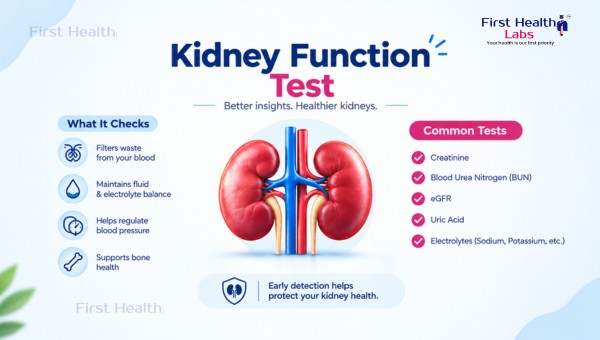
Kidneys perform several important jobs that help the body function properly. They remove waste materials from the bloodstream, control the amount of water in the body, help maintain mineral balance, and contribute to blood pressure regulation. When kidney activity changes, laboratory testing can help identify those changes.
A Kidney Function Test is not usually a single test. It is a collection of blood and urine investigations that can be used to evaluate different aspects of kidney health. The tests selected depend on the person's health, symptoms, medical history, and reason for evaluation. Understanding these investigations can make it easier to interpret kidney function test results and understand why a healthcare professional may recommend them.
Kidney Function Test
A Kidney Function Test is a group of laboratory investigations used to gather information about how effectively the kidneys are working. Some tests examine substances circulating in the blood, while others look for changes in urine. Common investigations may include creatinine, estimated glomerular filtration rate (eGFR), urea, and urine testing. Additional tests may be added when a healthcare professional needs more information about a person's kidney health.
The term kidney health test is sometimes used in a general sense for these investigations. You may also come across names such as KFT test or renal function test. The terminology can vary, so it is important to check which individual tests are included.
Why Are Kidney Function Tests Done?
Kidney problems do not always cause noticeable symptoms at the beginning. Laboratory testing can provide information about kidney function even when a person feels generally well.
A healthcare professional may suggest testing for several reasons, such as:
-
Monitoring an existing kidney condition
-
Investigating an unexpected change in blood or urine
-
Checking kidney health in people with diabetes
-
Monitoring people with high blood pressure
-
Assessing kidney function before or during certain treatments
-
Investigating symptoms that could be linked to the urinary system
-
Following changes seen in previous laboratory reports
The purpose of testing differs from person to person. The results are normally assessed alongside other medical information.
Which Tests Are Used to Assess Kidney Function?
Different investigations provide different pieces of information. A healthcare professional may choose one test or several depending on the situation.
Creatinine Test
A Creatinine test measures creatinine in the bloodstream. Creatinine is generated naturally through normal muscle activity and is removed from the body primarily by the kidneys. If kidney filtration decreases, creatinine can accumulate in the blood. However, the result can also be influenced by muscle size, dietary intake, exercise, hydration, and some medicines.
This means a creatinine value should not automatically be interpreted as evidence of kidney disease without considering other factors.
eGFR Test
The eGFR test gives an estimated value of how efficiently the kidneys filter blood. It is calculated using blood creatinine together with information required by the particular estimation equation.
eGFR is useful for evaluating filtration, but it is an estimate rather than a direct measurement of the kidneys' filtering capacity. Healthcare professionals may compare eGFR values over time rather than relying on one isolated result. Other findings, including urine results and medical history, may also be considered.
Urea Test
A Urea test measures urea in the blood. Urea is formed when the body processes proteins and is normally eliminated through the kidneys. For this reason, urea is generally reviewed together with other kidney-related measurements.
Urine Examination
Blood tests are only one part of kidney assessment. Urine can also provide useful information.
Depending on the reason for testing, a urine sample may be examined for substances such as protein, albumin, blood, or other abnormalities. An albumin-to-creatinine ratio may be used in some situations to assess albumin loss through the urine.
What Is a Kidney Function Blood Test?
A kidney function blood test refers to blood-based investigations that provide information about kidney filtration and waste removal. Creatinine, eGFR, and urea are commonly associated with blood-based kidney assessment. However, the exact combination depends on why the person is being tested. Blood results may provide important information, but they do not always give a complete picture by themselves. Urine findings and other clinical information may also be needed.
How to Check Kidney Function?
If you are searching for how to check kidney function, there is usually more than one measurement that can be considered.
A healthcare professional may use:
-
eGFR
-
Blood urea
-
Routine urine examination
-
Urine albumin testing when appropriate
-
Blood pressure measurement
-
Additional investigations when required
Using several pieces of information can give a clearer picture than depending on a single laboratory value.
How to Understand Kidney Function Test Results
Kidney function test results can contain several numbers and measurements. Each result has a particular meaning and should be considered in context.
For example, creatinine provides information about the level of a waste product in the blood, while eGFR estimates filtration. Urea reflects another waste product that can be influenced by kidney function and several other factors. Urine results can provide additional information about substances being lost through the kidneys.
An isolated abnormal value does not always indicate permanent kidney damage. Temporary illness, dehydration, medications, diet, or other factors can influence certain results.
Understanding the Kidney Function Test Normal Range
There is no universal value that can be considered the Kidney function test normal range for every person or every type of kidney investigation. Different tests measure different aspects of kidney health, so their reference values are not the same. Results can also vary based on factors such as age, sex, muscle composition, testing method, and the reference standards used by the laboratory. For eGFR, healthcare professionals generally use established categories to assess kidney filtration rather than relying on one fixed number.
When reviewing a report, the laboratory's own reference information should be considered. However, the result should not be interpreted in isolation because a healthcare professional may take the person's symptoms, medical history, medications, and other test findings into account.
Who Should Consider Kidney Function Testing?
Kidney testing may be advised when a person has a higher risk of developing kidney-related problems or already has a condition that can affect kidney health.
A healthcare professional may recommend testing for people who have:
-
Diabetes
-
Persistent or poorly controlled high blood pressure
-
A previous history of kidney disease or kidney-related problems
-
Close relatives with kidney disease
-
Certain cardiovascular conditions
-
Selected autoimmune disorders
-
Frequent or recurring urinary concerns
-
Prolonged use of medicines that may influence kidney function
A Kidney Function Test may also be suggested when an examination, blood test, or urine test shows an unexpected finding that requires further evaluation.
What Symptoms May Be Linked to Kidney Problems?
Kidney conditions do not always produce noticeable warning signs, especially during their earlier stages. When symptoms do appear, their nature can depend on the cause and extent of the kidney problem.
Changes in urination, swelling in the feet or ankles, blood in the urine, ongoing tiredness, nausea, or noticeable changes in urine may prompt a healthcare professional to investigate kidney function. Changes in blood pressure may also be relevant in some situations. These symptoms can occur because of many different health conditions and should not be taken as proof of kidney disease. Appropriate testing and medical evaluation are needed to identify the underlying cause.
What Factors Can Affect Kidney Test Results?
Kidney-related laboratory values can change for several reasons, and an unusual result does not always indicate lasting kidney damage.
Factors that may influence certain results include:
-
Inadequate fluid intake or dehydration
-
Heavy physical activity before testing
-
Differences in muscle mass
-
Dietary patterns, including protein consumption
-
Certain prescription or other medicines
-
A recent illness
-
Infections
-
Other existing health conditions
If a result appears unusual, a healthcare professional may review these factors along with previous reports and other investigations before deciding whether repeat or additional testing is appropriate.
How Frequently Should Kidney Function Be Checked?
The appropriate frequency of kidney testing depends on the individual. People who already have kidney disease or conditions that increase kidney risk may need monitoring at intervals recommended by their healthcare professional. Previous Kidney Function Test results, diabetes, high blood pressure, medications, family history, and other medical conditions can all influence how often testing is needed.
Therefore, kidney testing does not follow one fixed timetable for everyone. The schedule is usually determined according to personal health needs and changes over time.
Can Kidney Function Change Over Time?
Kidney function is not necessarily constant throughout a person's life. Test values can change temporarily during dehydration, illness, or certain treatments, while some underlying conditions may cause longer-lasting changes. When the cause is temporary and treated appropriately, kidney-related measurements may return toward previous levels. In other cases, ongoing changes may require regular follow-up.
Looking at a series of kidney function test results can sometimes provide more useful information than assessing one report by itself, particularly when monitoring a known condition.
Is a Renal Function Test Different From a Kidney Function Test?
The terms renal function test and Kidney Function Test are often used for investigations that assess the working condition of the kidneys. "Renal" is the medical term used to describe something related to the kidneys.
However, the name of a test panel does not necessarily indicate that it contains the same investigations everywhere. One laboratory may include certain blood or urine measurements, while another may use a different combination. For this reason, it is useful to review the individual tests listed on the laboratory report rather than relying only on the panel name.
What Is a KFT Test?
KFT test is a commonly used short form for Kidney Function Test. It generally refers to a group of investigations intended to provide information about kidney function. Depending on the laboratory and the purpose of testing, a KFT test may contain measurements such as creatinine, eGFR, urea, and selected urine tests. Since there is no identical test combination used in every setting, checking the actual parameters listed on the report can help clarify what was tested.
Conclusion
A Kidney Function Test brings together laboratory information that can help assess how the kidneys are filtering blood and handling waste products. Depending on the situation, the assessment may involve creatinine, eGFR, urea, and urine investigations. When looking at kidney function test results, one value should not be considered separately from the rest of the report. The Kidney function test normal range also varies according to the specific investigation and individual circumstances.
If you are learning how to check kidney function or have recently undergone a kidney function blood test, the findings should be reviewed along with your medical history, symptoms, and other relevant clinical information.
FAQ’s
1. What is the main purpose of a Kidney Function Test?
A Kidney Function Test helps provide information about how well the kidneys are performing their filtering and waste-removal functions. Blood and urine investigations may be used depending on the reason for testing.
2. What does a urea test show about kidney health?
A Urea test measures the amount of urea present in the blood. Urea is produced when proteins are broken down and is normally removed from the body through the kidneys. Its level can be influenced by kidney function as well as other factors.
3. Why is creatinine measured during kidney testing?
A Creatinine test measures a waste product that is normally cleared from the blood by the kidneys. Changes in creatinine can provide useful information about filtration, although factors such as muscle mass, diet, and hydration can also affect the result.
4. What information does an eGFR result provide?
An eGFR test gives an estimated indication of the kidneys' filtering ability. It is calculated using blood creatinine and other relevant factors. Healthcare professionals may assess the value together with other results and, when necessary, measurements taken over time.
5. Can a person have reduced kidney function without feeling sick?
Yes. Some changes in kidney function may occur without clear symptoms. This is why testing may be considered for people who have certain medical conditions or risk factors, even when they feel well.
6. Do kidney test results remain the same throughout life?
Not necessarily. Kidney-related test values can change because of age, health conditions, hydration, medicines, temporary illness, or other factors. Comparing results from different times may help healthcare professionals identify changes.
7. Does every KFT test contain the same investigations?
No. The components of a KFT test can vary between laboratories and depending on why the testing is being performed. A report may include different combinations of blood and urine measurements.
8. Can medicines affect the results of kidney testing?
Yes. Some medicines can influence kidney-related laboratory values or kidney function itself. When reviewing a report, it is important to tell the healthcare professional about medicines and supplements being taken.
9. Is a urine test useful when checking kidney function?
Yes. Urine testing can provide information that may not be available from blood tests alone. Depending on the situation, urine may be checked for albumin, protein, blood, or other abnormalities.
10. What should I do if my kidney test result is outside the reference range?
An unusual result does not automatically mean that a person has kidney disease. The result should be reviewed with a healthcare professional, who can consider the laboratory reference range, symptoms, medical history, medications, and other test findings.
Recent Post

Lipid Profile vs Cholesterol Test: What Is the Difference?

How to Check Kidney Health

Top 10 Essential Blood Tests for Adults

Why Annual Health Checkups Matter

Vitamin D Deficiency: Symptoms, Causes & Treatment

Early Signs of Diabetes: Warning Signs You Shouldn’t Ignore

Vitamin B12 Deficiency Symptoms

Benefits of Regular Health Checkups for Better Health

10 Essential Tests Every Diabetic Should Regularly Undergo

Unlocking the Benefits of Ozone Therapy for Skin: A Complete Guide